













When damp appears inside a home, most people immediately look at the wall.
They check the plaster.
They check the skirting boards.
Sometimes they even assume it must be rising damp.
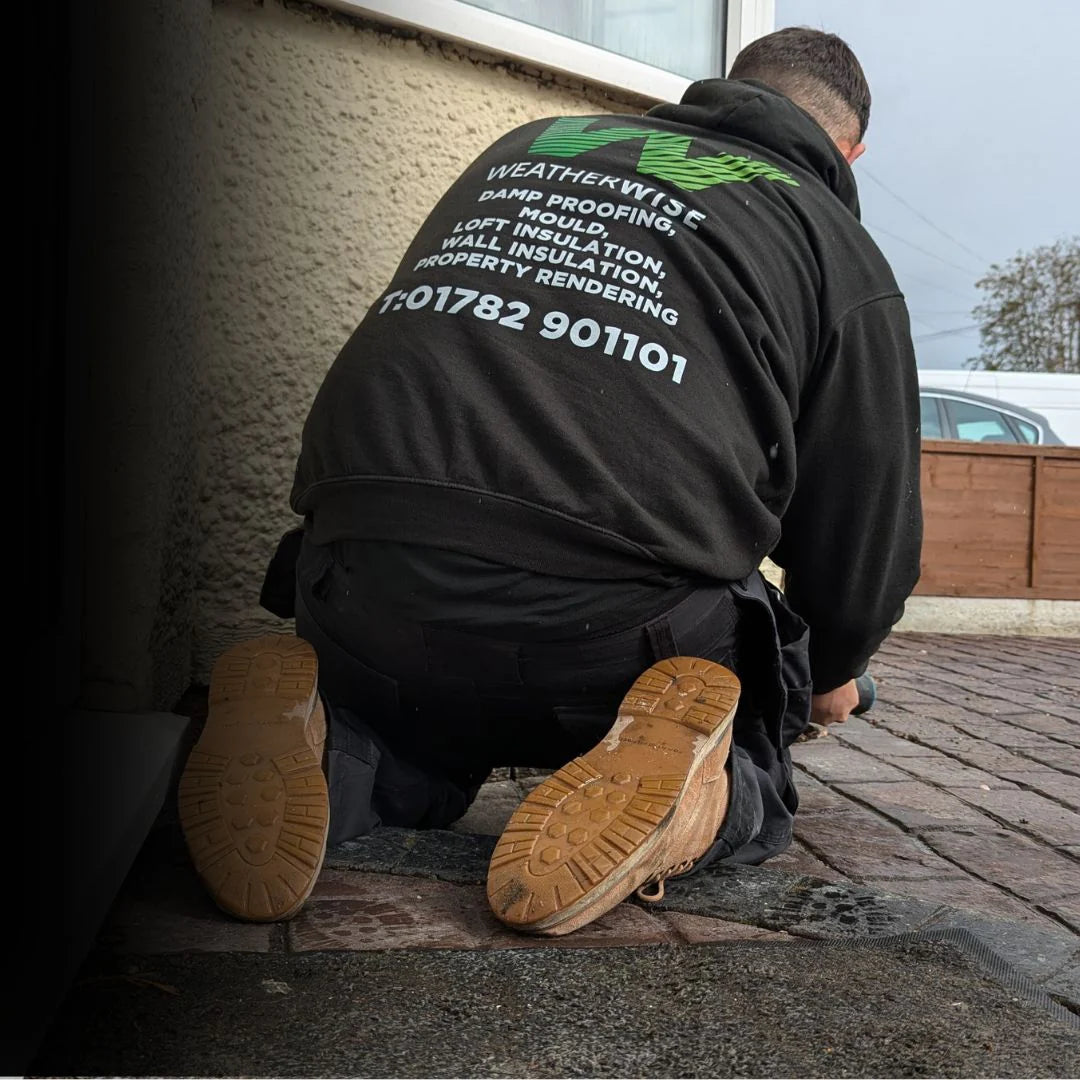
But in many cases, the real cause of damp problems starts outside the building.
In Altrincham homes, we regularly investigate properties where damp patches have developed because rainwater and surface water are not draining away from the property correctly.
The key lesson is simple:
Before treating damp inside, it’s always worth checking what’s happening outside.
🌧️ How Surface Water Affects Walls
When rainwater falls around a property, it should drain away safely through:
-
Properly sloped patios and driveways
-
External drainage channels
-
Gullies connected to drainage systems
-
Natural ground drainage away from the building
If water collects near the base of a wall instead, the masonry can become repeatedly saturated.
Over time, this moisture can begin to move into the wall structure.
This may appear internally as:
-
Damp patches
-
Blown plaster
-
Salt staining
-
Peeling paint
The issue isn’t always the wall itself — it’s the environment around it.
🧱 Ground Levels and Water Build-Up
Raised external ground levels are a very common cause of damp in Altrincham homes.
This often happens when:
-
New patios are installed
-
Decorative stone or soil is banked against the wall
-
Driveways are resurfaced
-
Landscaping changes the natural drainage path
When ground levels sit too high against the building, water can accumulate near the wall.
This increases the moisture load on the masonry and can allow dampness to track inside.
🌊 Blocked or Poorly Designed Drainage
Drainage problems can also occur when:
-
Gullies are blocked with debris
-
Downpipes discharge water directly onto walls
-
Drainage channels are missing
-
External paving slopes towards the house
During heavy rain, water should move away from the property.
If it moves towards the wall instead, moisture can build up repeatedly.
Over time, this can lead to penetrating damp.
🪟 Damp Doesn’t Always Appear Where the Water Enters
One of the challenges with drainage-related damp is that the internal damp patch doesn’t always appear exactly where the water enters.
Moisture can travel through the wall structure before appearing inside.
This means the visible damp area may be:
-
Higher up the wall
-
Offset from the external defect
-
Appearing intermittently after rainfall
This is why proper inspection is essential before recommending internal damp treatments.
🔍 What Surveyors Check Outside the Property
When investigating damp problems in Altrincham homes, we always assess the external environment first.
This typically includes checking:
-
Ground levels around the property
-
Drainage channels and gullies
-
Downpipe discharge points
-
External paving slopes
-
Signs of water pooling near walls
Often, correcting these issues can significantly reduce the moisture affecting the building.
🛠️ Fixing the Cause Before Treating the Wall
If drainage is the problem, the solution often involves correcting the external conditions.
This may include:
✔ Improving surface water drainage
✔ Clearing blocked gullies
✔ Adjusting ground levels around the property
✔ Redirecting downpipes away from the wall
✔ Installing proper drainage channels
Once water is directed away from the building, the wall can begin to dry naturally.
👷 Professional Standards & Independent Guidance
Weather Wise Solutions are proud members of:
🔗 Federation of Damp – https://federationofdamp.co.uk/
🔗 Damp Proofing Association – https://www.dampproofingassociation.co.uk/
Our surveyors hold CPD qualifications in Dampness in Buildings, and several members of our surveying team are Level 3 qualified in damp and timber inspection, ensuring investigations are carried out using modern diagnostic methods.
You can view our independent reviews here:
🔗 TrustATrader – https://www.trustatrader.com/traders/weather-wise-solutions-limited-damp-surveyor-newcastle-under-lyme
🔗 Checkatrade – https://www.checkatrade.com/trades/weatherwisesolutionslimited
If you’ve noticed damp patches in your Altrincham home after heavy rain, it’s often worth inspecting the drainage and ground conditions around the building first.
Looking outside before treating inside can prevent unnecessary repairs and help resolve the root cause of the problem.
📍 Book a Free Survey for your home here:
https://weatherwiseuk.co.uk/pages/contact