














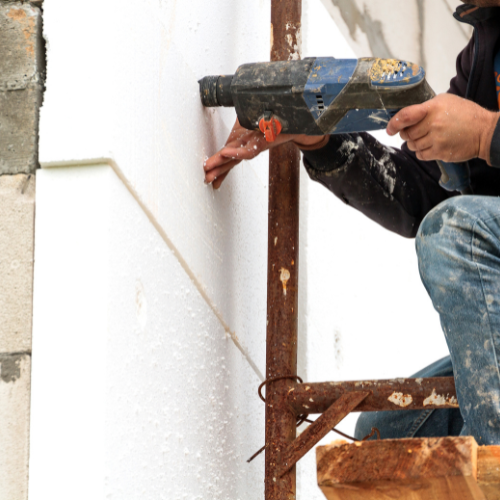
Every Home Holds Heat Differently. That’s Where We Begin
Wall insulation works best when it matches how your home is built and how it behaves day to day. Weather Wise starts with a free survey to assess wall structure, heat-loss points, and any signs of damp or condensation that could affect performance.
From there, the suitable insulation method is chosen, whether that involves cavity fill or internal or external solutions for solid walls. Care is taken during installation to ensure even coverage and a proper fit within the wall.
The result is steadier indoor temperatures, fewer cold areas, and insulation that works with the property rather than against it.
Book a Free Survey below or call us on 01782 901101
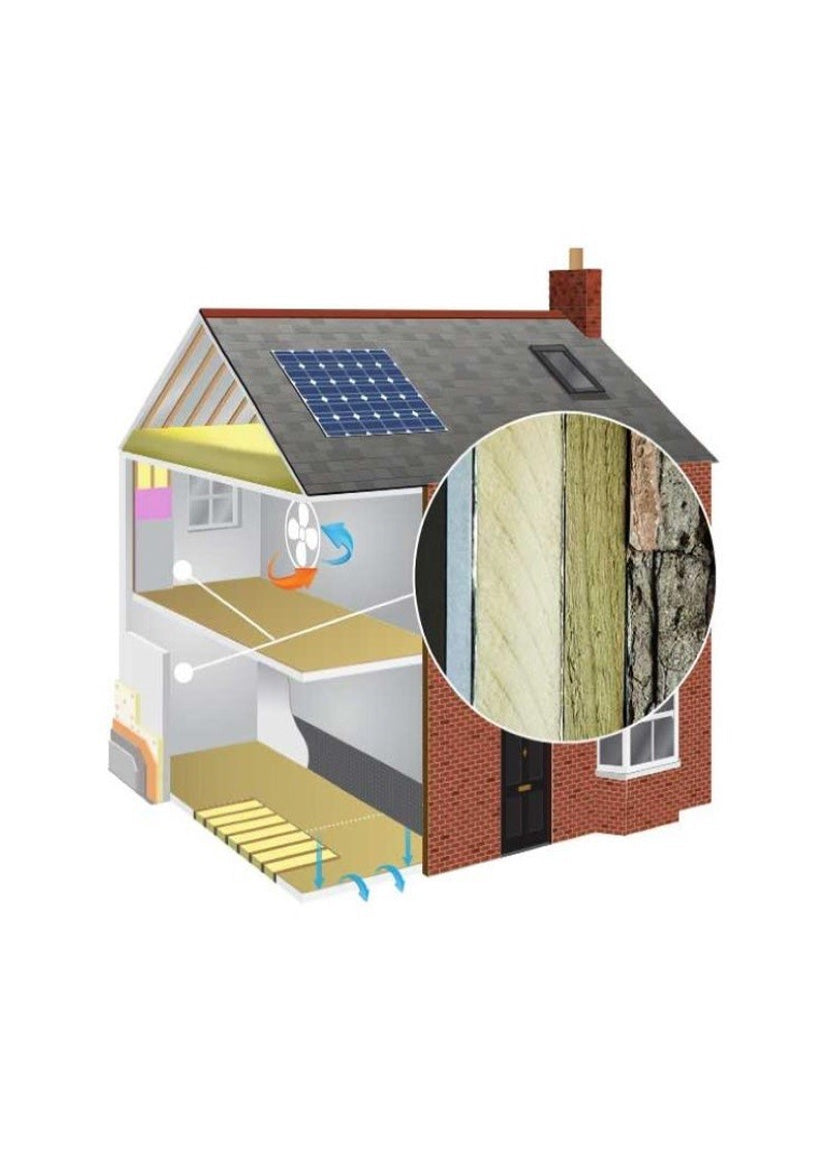
Why Walls Lose Heat So Easily
Walls are one of the largest areas where heat escapes from a property, especially in older homes with little or no insulation. Solid walls lose heat directly through the masonry itself, while cavity walls can allow warmth to escape when insulation is missing, damaged, or unevenly installed.
As internal wall surfaces become colder, rooms often feel harder to heat consistently. Cold walls can also contribute to condensation forming indoors when warm air settles against cooler surfaces around the property.
Proper wall insulation helps reduce heat loss, improve indoor comfort, and create more stable temperatures throughout the home.

Different Homes Need Different Insulation Approaches
Not every property loses heat in the same way. Homes with cavity walls may be suitable for cavity wall insulation, while older solid-wall properties often require internal or external wall insulation systems to improve thermal performance properly.
Victorian, Edwardian, and older solid-wall homes are especially prone to cold internal surfaces, uneven room temperatures, and higher heat loss because the walls contain no insulation cavity to slow heat transfer.
Weather Wise surveys assess how the property is constructed before recommending the most suitable insulation system.

External Wall Insulation That Fixes Cold Walls
If your home has solid walls, heat escapes straight through them. You notice it when rooms cool down quickly, walls feel cold even with the heating on, and energy use keeps rising without a clear reason.
Weather Wise installs external wall insulation as a complete system applied to the outside of your home. Insulation boards are fixed to your external walls and finished with a reinforced render. This creates a sealed outer layer that improves how your home holds heat while protecting it from weather exposure.
Here's what changes once it's in place:
- Your home holds warmth for longer: Heat no longer escapes as quickly through the walls, so rooms stay comfortable without needing constant heating.
- Walls feel warmer from the inside: Internal surfaces stop pulling heat away from the room, helping reduce cold spots and uneven temperatures.
- The outside of your home is sealed and protected: The render finish covers exposed or ageing surfaces and acts as a barrier against rain and wind.
- Moisture finds it harder to settle on walls: With warmer surfaces, condensation is less likely to form, which helps reduce the conditions where damp and mould develop.
- Your property gets a cleaner, updated finish: The new render gives your home a uniform exterior while strengthening the outer surface.
- External noise becomes less intrusive indoors: The added insulation thickness helps reduce sound coming in from outside.
Book your free survey and find out exactly how much heat your home is losing.

From Bare Wall to Fully Insulated Exterior
Before insulation is installed, Weather Wise prepares the exterior walls to ensure the system performs reliably long-term. Existing surface damage, unstable render, and moisture-related issues are addressed before the insulation boards are fitted.
The installation process may include:
- Access preparation and scaffolding
- Surface cleaning and wall preparation
- Damp-proof protection where required
- Repairs to damaged masonry or render
- Fitting high-density insulation boards
- Reinforced protective render systems
- Sealing and weatherproof finishing work
The completed system improves thermal performance while also helping protect the outside of the property from weather exposure.
Book a free survey below or call 01782 901101 to discuss your property.
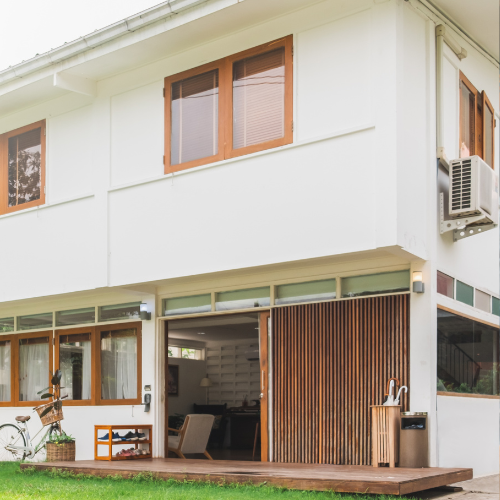
Wall Coating That Moves With Your Home, Not Against It
If your exterior walls show fine cracks or peeling paint, a standard repaint will not last. Weather Wise applies an elastomeric coating that stretches with the wall and helps protect the surface underneath.
The coating is designed to remain breathable, allowing moisture within the wall structure to escape while still improving weather protection externally.
This coating forms a smooth, uniform finish while allowing moisture to escape. It helps prevent cracking, covers fine surface defects, and stands up to weather exposure.
What does it do for your home?
- Creates a clean, even finish
- Allows walls to breathe
- Reduces visible cracking
- Covers fine surface cracks
- Handles movement without damage
- Protects against weather wear
Book a free survey to check if this suits your property.

Why Homeowners Choose Weather Wise?
Some homes need preparation work before insulation is added. Cracked render, unstable masonry, existing moisture penetration, or untreated damp can all affect how the system performs once installed.
Weather Wise checks the condition of the exterior carefully before recommending any insulation solution for the property.
- 40+ years of experience
- Insulation systems matched to the property structure
- Focus on fixing the root cause, not just symptoms
- Free survey with clear, honest advice
Wall Insulation Questions, Answered
The questions UK homeowners actually ask. Tap to expand.
Does wall insulation help reduce condensation?
Improving wall insulation can help reduce cold internal surfaces where condensation often forms, particularly around external walls and colder rooms.
What is the difference between cavity wall and solid wall insulation?
Cavity wall insulation fills the gap between two layers of masonry, while solid-wall insulation is applied internally or externally because older solid walls contain no cavity space.
Can wall insulation help lower heating bills?
Improved insulation helps reduce heat loss through the walls, which may improve energy efficiency and reduce heating demand throughout the property.
Is external wall insulation suitable for older homes?
Many older solid-wall properties can benefit from external wall insulation, though the condition of the walls and surrounding structure should be assessed first.
Will wall insulation stop damp?
Insulation alone does not fix existing damp problems, though properly installed systems may help reduce cold surfaces where condensation develops.
How long does external wall insulation last?
Professionally installed systems are designed as long-term solutions when the wall structure and surrounding conditions are suitable.
Real Life Reviews
We love doing an amazing job for our customers, but dont take our word for it, here are some real life reviews.
-

Within a week!
Got in touch with weather wise over some damp and some pointing that had worn away, had a visit from Jake who was very helpful and explained everything clearly. Jake managed to get the work underway within the week and the lads who carried the work out were polite and tidy in there work. Very pleased with the results and would highly recommend weather wise.
-

Worry Free
I was really worried about some damp. Weather wise came around and did me a survey, i felt completely at ease and they found that my issue wasnt rising damp, just a small leak that had been there for a while. Thank you, highly reccomended.
