













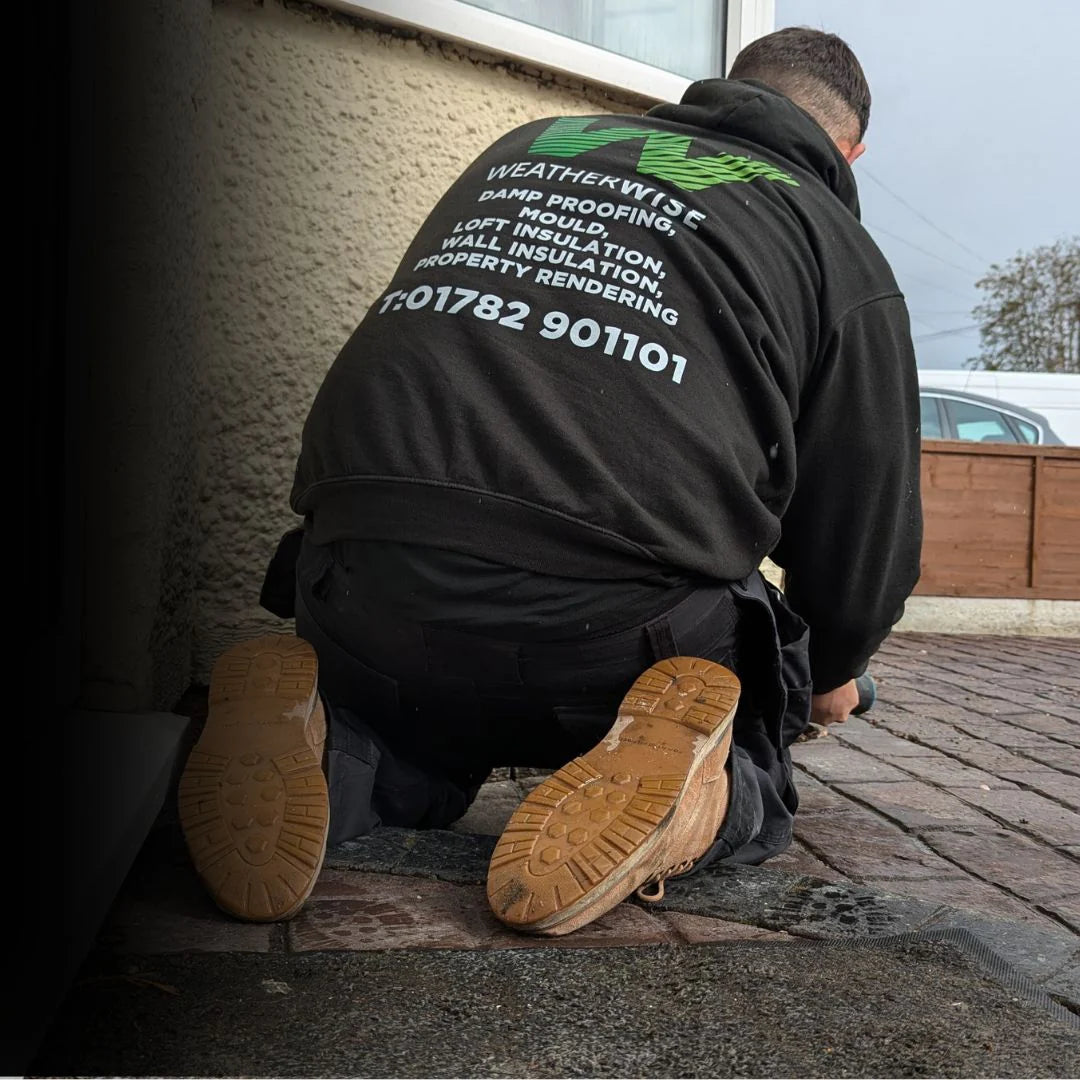

Damp at the bottom of walls is one of the most common concerns we see in Stoke-on-Trent properties.
It usually starts subtly:
-
Paint begins to peel
-
Skirting boards feel slightly damp
-
Plaster may start to deteriorate
Naturally, many homeowners assume one thing:
👉 “This must be rising damp.”
But in reality, damp at low level can be caused by several different factors — and correct identification is key before any work is carried out.
At Weather Wise Solutions — a family-run damp specialist covering Stoke-on-Trent — we take a diagnostic approach to understand exactly what’s happening before recommending any solution.
🧱 What Does Low-Level Damp Look Like?
Low-level damp typically appears within the first metre of a wall.
Common signs include:
-
Damp patches near skirting boards
-
Blown or crumbling plaster
-
Salt staining or discolouration
-
Timber decay to skirting boards
While these symptoms are often grouped together, they don’t all point to the same cause.
🌫️ Condensation at Floor Level
Condensation isn’t just a high-level issue.
In many homes, moisture settles at lower levels due to:
-
Poor airflow around furniture
-
Cold external walls
-
Restricted ventilation
This can lead to damp patches forming near the floor — particularly behind sofas, cabinets or in corners.
🧱 Bridging of the Damp Proof Course (DPC)
Another common cause is bridging, where moisture bypasses the damp proof course.
This can happen when:
-
External ground levels are too high
-
Paths or patios have been raised
-
Internal plaster connects down to floor level
Instead of stopping moisture, the DPC is effectively bypassed.
This often mimics the appearance of rising damp.
🌧️ External Defects and Ground Moisture
Water can also enter at low level from outside.
Common external contributors include:
-
Defective pointing or brickwork
-
Poor drainage around the property
-
Blocked or overflowing gutters
-
Saturated ground levels
These issues can allow moisture to track into the wall at lower levels.
🧂 The Role of Salts
In some cases, salts within the wall can attract moisture.
This is known as hygroscopic behaviour.
Even when the original source of damp has reduced, salts can continue to draw moisture from the air, keeping the wall damp.
This is why some areas never seem to fully dry out.
🔍 What Should You Check First?
Before assuming the cause, there are several key areas to inspect:
External Checks
✔ Ground levels in relation to the DPC (minimum 150mm recommended)
✔ Condition of brickwork, pointing and render
✔ Guttering and drainage performance
Internal Checks
✔ Ventilation and airflow within the room
✔ Furniture placement against external walls
✔ Signs of condensation (especially in corners)
Environmental Factors
✔ Humidity levels inside the home
✔ Heating patterns
✔ Occupancy habits
🛠️ Why a Diagnostic Approach Matters
Low-level damp can look the same regardless of the cause.
But the solution depends entirely on how the moisture is getting there.
For example:
-
Condensation → improve ventilation
-
Bridging → remove the bridge
-
External defects → repair building fabric
-
Genuine rising damp → specific remedial approach
Treating the wrong cause can lead to unnecessary work and ongoing problems.
🔍 How We Assess Damp in Stoke-on-Trent Homes
At Weather Wise Solutions, we carry out structured inspections that include:
-
Moisture profiling of walls
-
Humidity and temperature readings
-
External building inspection
-
Ventilation assessment
-
Identification of bridging or defects
This ensures we correctly diagnose the issue before recommending any work.
👷 Professional Standards & Independent Guidance
Weather Wise Solutions are proud members of:
🔗 Federation of Damp – https://federationofdamp.co.uk/
🔗 Damp Proofing Association – https://www.dampproofingassociation.co.uk/
Our surveyors hold CPD qualifications in Dampness in Buildings, and several members of our surveying team are Level 3 qualified in damp and timber inspection, ensuring investigations are carried out using modern diagnostic methods.
You can view our independent reviews here:
🔗 TrustATrader – https://www.trustatrader.com/traders/weather-wise-solutions-limited-damp-surveyor-newcastle-under-lyme
🔗 Checkatrade – https://www.checkatrade.com/trades/weatherwisesolutionslimited
If you’ve noticed damp at the bottom of walls in your Stoke-on-Trent home, it’s important not to assume the cause.
Most issues are linked to condensation, bridging or external defects rather than rising damp alone.
📍 Book a Free Survey for your home here:
https://weatherwiseuk.co.uk/pages/contact