













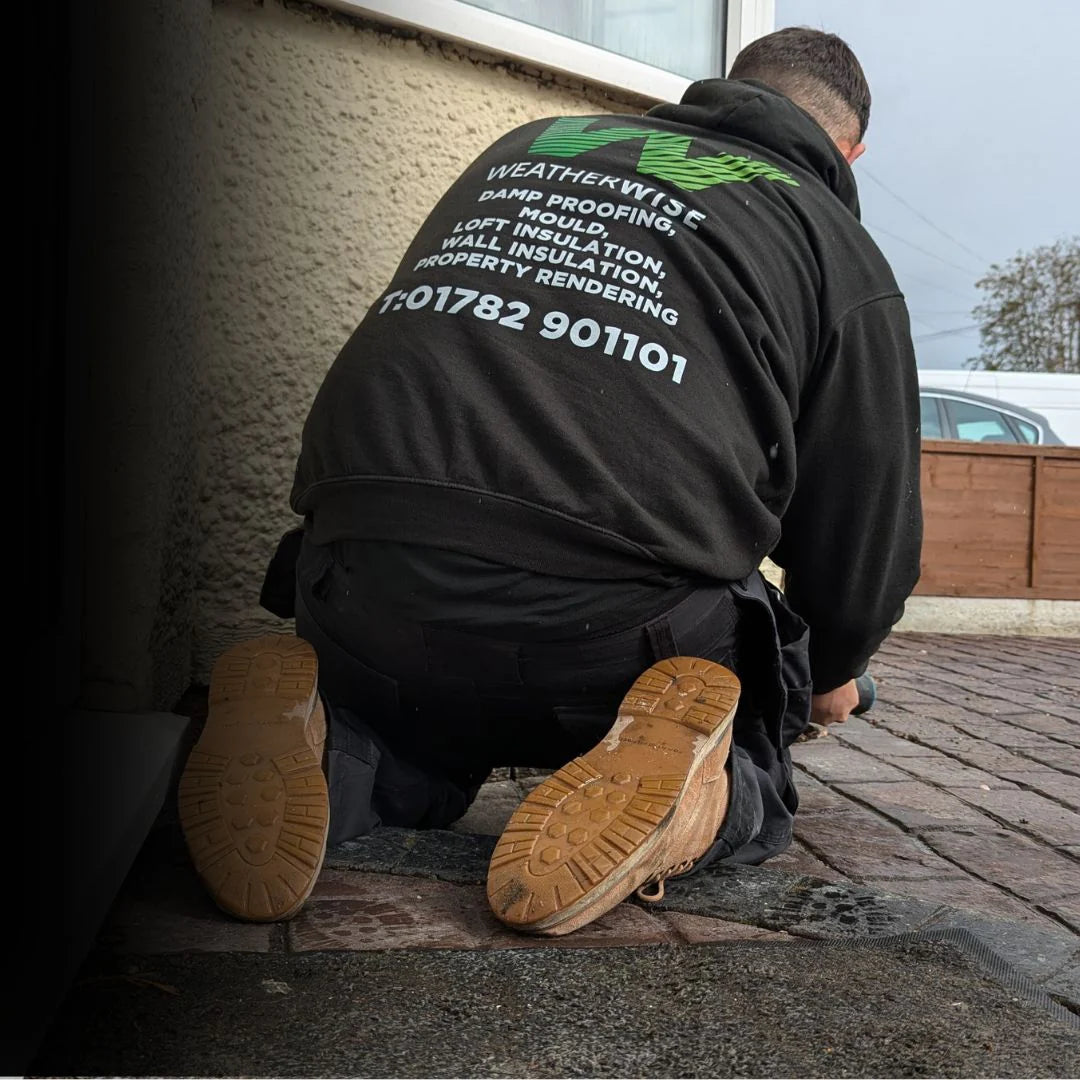

You press your finger into the wood…
and it gives slightly.
Not much — but enough to notice.
Maybe it’s a skirting board.
A floorboard.
Or timber near a wall.
At first, it’s easy to ignore.
But soft timber is one of the clearest early warning signs we see in Wigan homes.
At Weather Wise Solutions — a family-run damp and timber specialist — we’re often called in at this stage.
And the good news is:
👉 Catching it early usually means the problem is still manageable.
🪵 What Does “Soft Timber” Actually Mean?
Timber should feel firm and solid.
When it starts to soften, it usually means one thing:
👉 Moisture has been present for a sustained period.
Timber absorbs moisture from its surroundings.
As moisture content increases, the structure of the wood begins to weaken.
💧 The Critical Moisture Threshold
In timber diagnostics, moisture content is key.
-
0–16% → Generally safe
-
16–19% → At risk
-
20%+ → Conditions suitable for fungal decay
Once timber consistently exceeds around 20% moisture content, fungi can begin to break down the wood.
This is when decay starts.
🍂 Wet Rot – The Most Common Cause
In most Wigan properties, soft timber is caused by wet rot, not dry rot.
Wet rot occurs when timber is exposed to localised moisture.
Common sources include:
-
Damp walls in contact with timber
-
Leaks from plumbing or external defects
-
Poor subfloor ventilation
-
Condensation in enclosed spaces
Wet rot doesn’t spread aggressively like dry rot — but it will continue to deteriorate timber as long as moisture is present.
🔍 Early Signs to Look For
Softness is just one indicator.
Other signs of timber decay include:
-
Darkening of the wood
-
Cracking or splitting along the grain
-
A slightly spongy texture
-
Musty or damp odours
In some cases, the surface may still look relatively intact while the internal structure weakens.
🧱 Why Timber Near Walls Is Most Affected
We often see soft timber in areas where wood meets masonry, such as:
-
Skirting boards
-
Floor joist ends
-
Timber frames
This is because masonry can retain moisture.
If ventilation is poor or damp is present, that moisture transfers into the timber.
🌬️ Ventilation and Environment Matter
Timber decay isn’t just about water ingress — it’s about the environment.
Conditions that increase risk include:
-
Poor airflow
-
High humidity
-
Enclosed or unventilated spaces
-
Consistently cool temperatures
Without airflow, moisture remains trapped — allowing timber to stay damp.
🔍 How We Diagnose Timber Decay in Wigan Homes
At Weather Wise Solutions, we don’t just assess the timber — we assess the environment around it.
Our inspections include:
-
Moisture content testing of timber
-
Identifying the source of moisture
-
Checking ventilation levels
-
Inspecting surrounding masonry
-
Assessing risk of further decay
This ensures the cause is addressed, not just the symptom.
🛠️ What Happens Next?
The solution depends on the severity of the decay and the source of moisture.
Typical steps include:
✔ Removing or controlling the moisture source
✔ Improving ventilation
✔ Replacing severely affected timber where necessary
✔ Preserving remaining timber once dry
👉 The key is stopping the moisture first.
Without that, any repair will be temporary.
👷 Professional Standards & Independent Guidance
Weather Wise Solutions are proud members of:
🔗 Federation of Damp – https://federationofdamp.co.uk/
🔗 Damp Proofing Association – https://www.dampproofingassociation.co.uk/
Our surveyors hold CPD qualifications in Dampness in Buildings, and several members of our surveying team are Level 3 qualified in damp and timber inspection, ensuring investigations are carried out using modern diagnostic methods.
You can view our independent reviews here:
🔗 TrustATrader – https://www.trustatrader.com/traders/weather-wise-solutions-limited-damp-surveyor-newcastle-under-lyme
🔗 Checkatrade – https://www.checkatrade.com/trades/weatherwisesolutionslimited
If timber in your Wigan home feels soft, it’s usually a sign of prolonged moisture exposure and early decay.
Addressing the cause early can prevent more extensive damage.
📍 Book a Free Survey for your home here:
https://weatherwiseuk.co.uk/pages/contact