













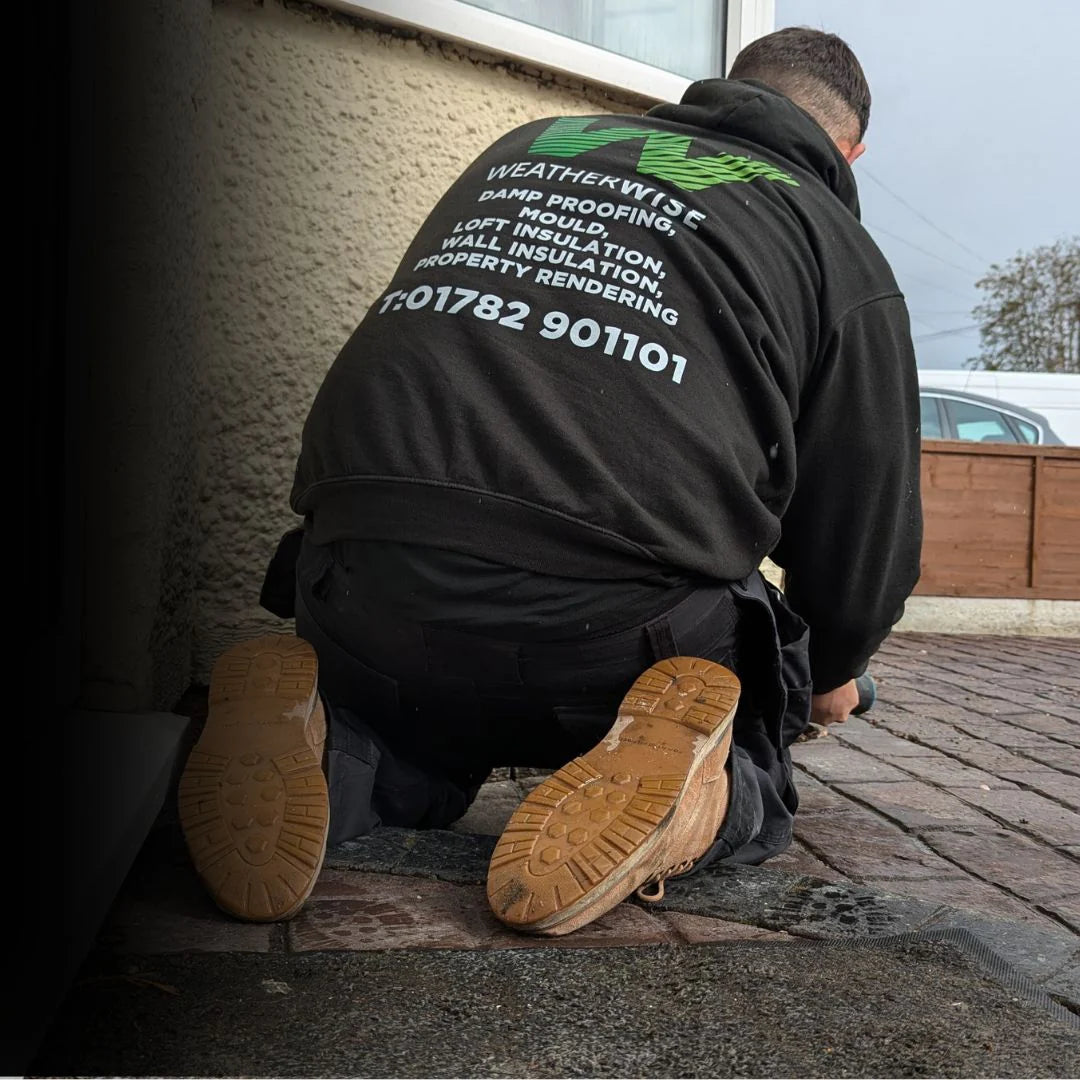

If you’re worried about damp in your Manchester home, you may be unsure what a professional damp survey actually involves. Many homeowners assume a survey simply means “taking a few meter readings,” but a proper inspection is far more detailed, structured, and diagnostic.
A professional damp survey is about understanding why moisture is present, not just confirming that it exists. The aim is to identify the true cause — whether that’s condensation, penetrating damp, subfloor moisture, ventilation failure, or a construction issue — and then recommend proportionate, effective solutions.
At Weather Wise Solutions, a family-run damp company, we carry out structured inspections that focus on accurate diagnosis rather than quick assumptions.
🔍 Step-by-Step: What We Do During a Damp Survey
1️⃣ Initial Discussion and Problem Understanding
Before any testing begins, we listen carefully to:
-
Where you see damp
-
When it appears (seasonal, after rain, overnight, etc.)
-
Whether mould is present
-
Any recent building works or changes
This context helps guide the inspection.
2️⃣ Visual Inspection of the Property
We examine both internally and externally, looking for:
-
Defective pointing or render
-
Cracked masonry
-
Raised external ground levels
-
Blocked air bricks
-
Faulty gutters or downpipes
-
Signs of condensation, mould, or cold surfaces
A lot of diagnosis comes from simple observation.
3️⃣ Moisture Mapping (Not Just Spot Readings)
Instead of relying on a single damp meter reading, we map moisture patterns across walls and floors to understand:
-
Where moisture is concentrated
-
Whether it follows external features
-
Whether it aligns with ventilation or temperature issues
This helps distinguish between structural damp and condensation-led problems.
4️⃣ Ventilation and Humidity Assessment
Because condensation is a leading cause of damp in modern homes, we check:
-
Extractor fan performance
-
Background ventilation
-
Airflow patterns
-
Room humidity levels
-
Cold surfaces that could be causing condensation
Many “damp” problems in Manchester are actually ventilation issues.
5️⃣ Subfloor and Timber Considerations (Where Relevant)
If your property has a suspended timber floor, we may assess:
-
Subfloor airflow
-
Condition of air bricks
-
Moisture levels in joists and sleeper walls
-
Signs of early timber decay
Damp smells or cold floors often point to subfloor moisture.
6️⃣ Accurate Diagnosis (The Most Important Part)
At the end of the survey, we determine whether the issue is most likely caused by:
-
Condensation
-
Penetrating damp
-
Subfloor moisture
-
Construction defects
-
Cold bridging
-
Or a combination of factors
This ensures you are not sold unnecessary damp proofing.
7️⃣ Clear Recommendations
You will receive practical advice on:
-
What is actually causing the problem
-
What genuinely needs fixing
-
Whether ventilation, repairs, or plastering is required
-
What works (if any) are appropriate
We focus on long-term solutions, not quick fixes.
Trusted suppliers and professional standards
Where materials are required, we work with respected industry suppliers including:
🔗 PAM Ties – https://www.pamties.co.uk/
🔗 Wykamol Group – https://wykamol.com/
All advice aligns with guidance from:
🔗 Federation of Damp – https://federationofdamp.co.uk/
🔗 Damp Proofing Association – https://www.dampproofingassociation.co.uk/
For independent reassurance, you can view our profiles on:
🔗 TrustATrader – https://www.trustatrader.com/traders/weather-wise-solutions-limited-damp-surveyor-newcastle-under-lyme
🔗 Checkatrade – https://www.checkatrade.com/trades/weatherwisesolutionslimited
A proper damp survey is about diagnosis, not assumptions.
Understanding the cause saves money and prevents repeat problems.
📍 Book a free survey:
https://weatherwiseuk.co.uk/pages/contact