













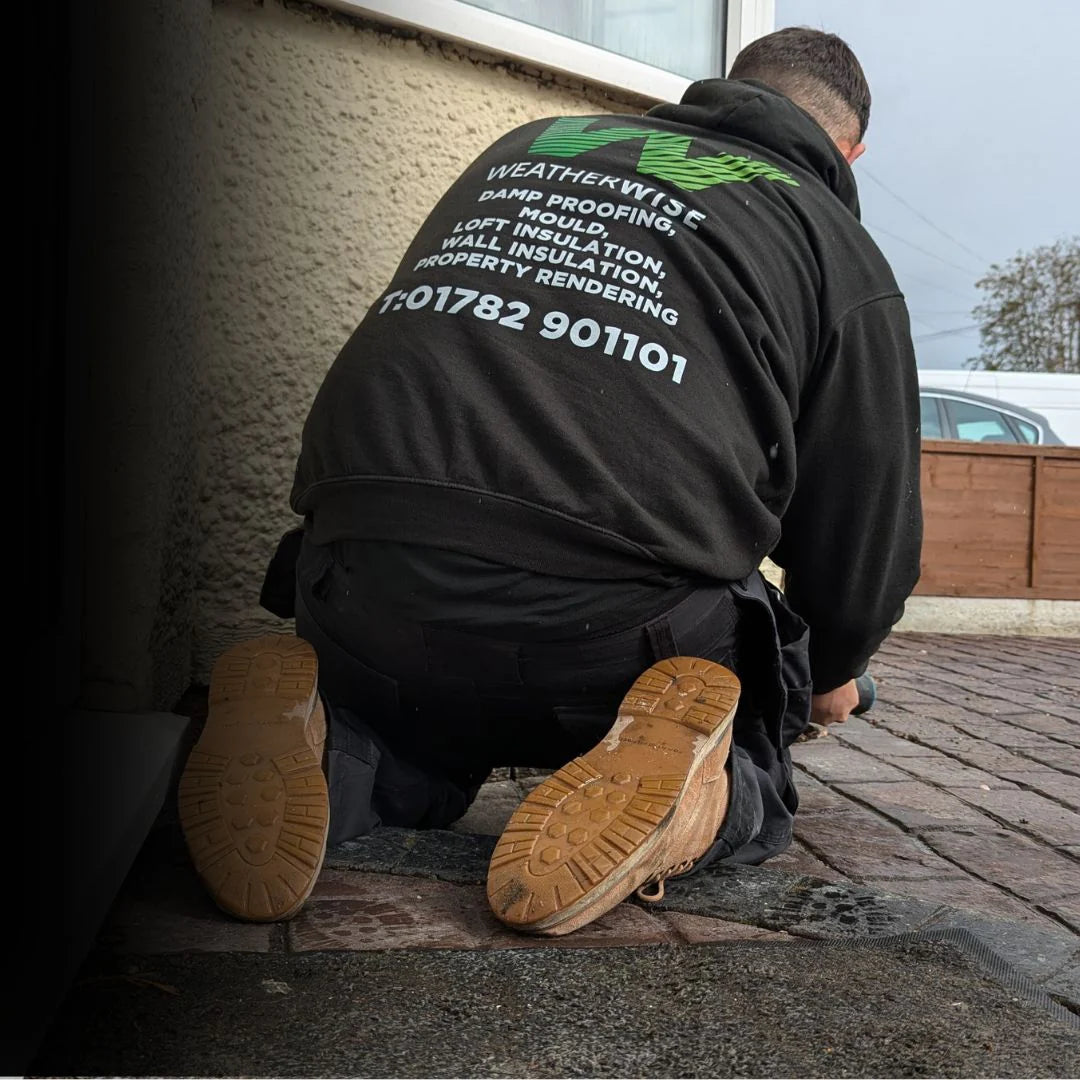

If your skirting boards in Runcorn feel soft, spongy, or slightly swollen, but don’t show obvious signs of rot, this often causes confusion. Many homeowners fear timber decay, but in many cases the issue is early moisture absorption rather than fungal rot.
Skirting boards sit at the junction between walls, floors, and internal air — making them highly sensitive to moisture. When humidity or condensation affects this area, timber can soften long before any structural decay develops.
At Weather Wise Solutions — a family-run damp and timber specialist — this is a very common issue we diagnose in Cheshire homes.
🪵 Why Skirting Boards Can Feel Soft
1️⃣ Early Moisture Absorption
Timber is hygroscopic, meaning it absorbs moisture from the surrounding air. When relative humidity is consistently high, skirting boards can take on moisture and soften without rotting.
At this stage, the timber often:
-
Feels soft to touch
-
Appears slightly swollen
-
Still retains its shape and fixings
2️⃣ Condensation at Low Level
Condensation doesn’t only occur on windows. Cooler wall bases and floor junctions can attract moisture — especially overnight — which is then absorbed by skirting boards.
This condensation often dries during the day, leaving no visible damp staining.
3️⃣ Bridging Plaster
Where plaster finishes extend down to the floor, moisture can transfer from masonry into the skirting. This is known as bridging, and it’s a common cause of low-level timber moisture without true rising damp.
4️⃣ Subfloor Moisture & Poor Airflow
In homes with suspended timber floors, high humidity beneath the floor can rise and affect skirting boards from behind. Blocked air bricks or poor subfloor ventilation often contribute to this issue.
5️⃣ Paint and Sealants Trapping Moisture
Modern paints and sealants can prevent timber from drying effectively. Moisture becomes trapped within the skirting, keeping it soft even when the room feels dry.
🔍 How We Diagnose Soft Skirting Boards in Runcorn
Rather than assuming rot, we assess why moisture is present, including:
-
Moisture testing of skirting boards and adjacent walls
-
Assessment of condensation risk at low level
-
Inspection for plaster bridging
-
Subfloor ventilation checks
-
External inspection to rule out penetrating damp
-
Timber condition assessment to confirm whether decay is present
This ensures early-stage moisture issues aren’t misdiagnosed as timber failure.
🛠️ How the Problem Is Properly Resolved
Depending on findings, solutions may include:
✔ Managing Humidity & Condensation
Reducing moisture levels so timber can dry naturally.
✔ Improving Subfloor Ventilation
Lowering humidity beneath floors to protect skirting boards.
✔ Removing Bridging
Ensuring plaster and finishes don’t transfer moisture into timber.
✔ Correct Timber Protection
Only recommending timber treatments if decay is actually present.
Where materials or systems are required, we work with trusted suppliers including:
🔗 PAM Ties – https://www.pamties.co.uk/
🔗 Wykamol Group – https://wykamol.com/
All advice aligns with guidance from:
🔗 Federation of Damp – https://federationofdamp.co.uk/
🔗 Damp Proofing Association – https://www.dampproofingassociation.co.uk/
For independent reassurance, you can also view our profiles on:
🔗 TrustATrader – https://www.trustatrader.com/traders/weather-wise-solutions-limited-damp-surveyor-newcastle-under-lyme
🔗 Checkatrade – https://www.checkatrade.com/trades/weatherwisesolutionslimited
Soft skirting boards are an early warning sign —
not always rot.
Early diagnosis prevents unnecessary timber replacement.
📍 Book a free survey:
https://weatherwiseuk.co.uk/pages/contact