













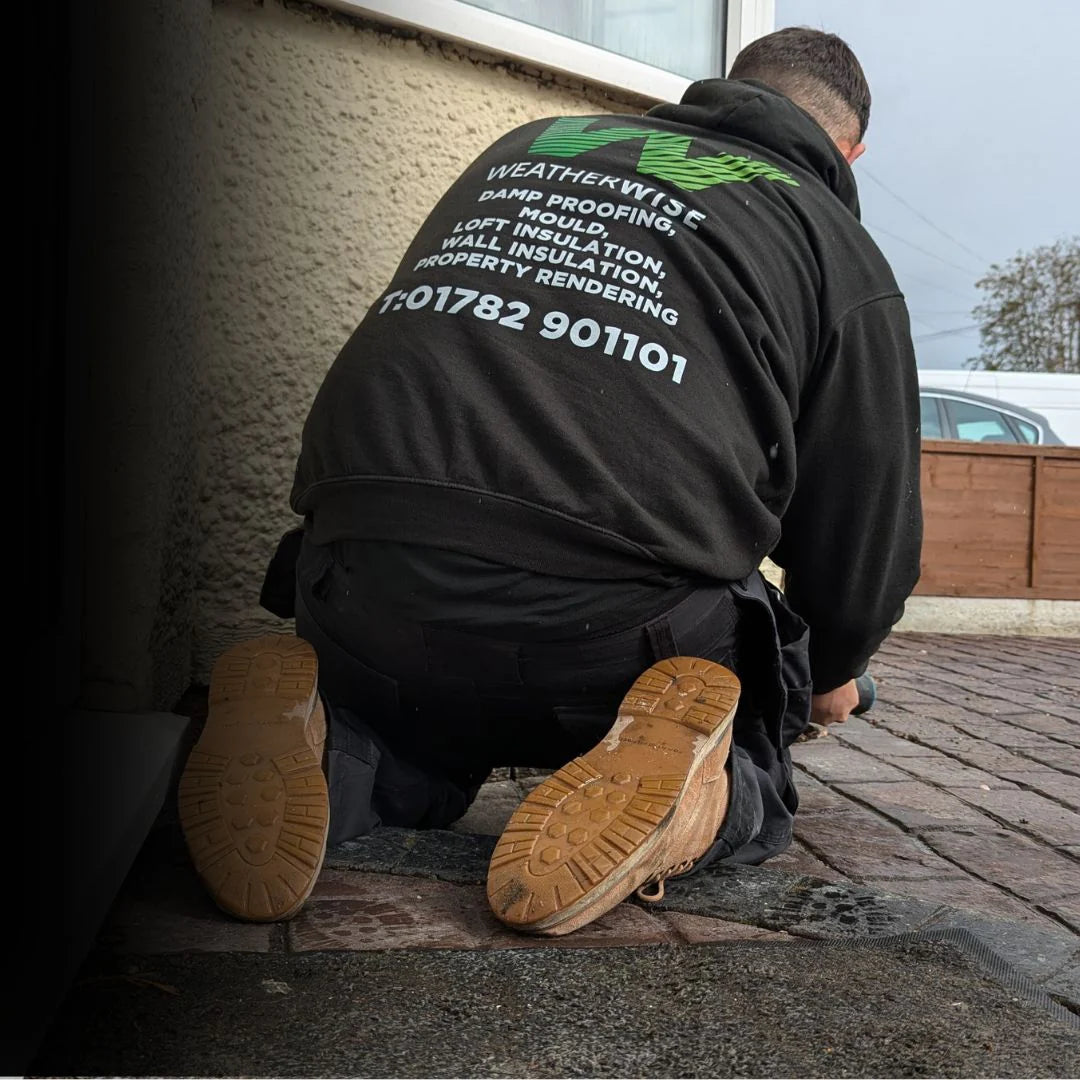

Mould forming around window reveals is a very common issue in St Helens homes, particularly during the colder months. Homeowners often assume it’s caused by leaking windows, but in most cases the real cause is condensation forming on cold window surrounds, rather than water coming in from outside.
Window reveals are naturally colder than the rest of the wall. When warm, moisture-laden air inside the home comes into contact with these cold surfaces, condensation forms — creating the perfect conditions for mould growth.
At Weather Wise Solutions — a family-run damp and ventilation specialist — we regularly assess properties where window mould is recurring despite cleaning or redecorating.
🪟 Why Window Reveals Are Prone to Mould
1️⃣ Cold Window Reveals
Window reveals are thinner than surrounding walls and often lack insulation. This makes them colder, especially in winter, causing moisture in the air to condense on the surface.
2️⃣ Condensation Build-Up
Bedrooms, living rooms and kitchens all generate moisture. Without adequate ventilation, this moisture settles on the coldest surfaces — usually windows and their surrounding reveals.
3️⃣ Poor Airflow Around Windows
Curtains, blinds and furniture placed close to windows restrict air circulation. Without airflow, condensation remains on the reveal for longer, encouraging mould growth.
4️⃣ Insulation Gaps
Older installations or replacement windows may have insulation gaps around the frame. These gaps create cold bridges that worsen condensation and mould risk.
5️⃣ Modern Living Patterns
Improved airtightness, reduced background ventilation and intermittent heating all increase condensation risk, especially around windows.
🔍 How We Diagnose Window Mould in St Helens
Our inspections focus on identifying why condensation is forming, not just removing the mould. This includes:
-
Humidity and moisture assessment
-
Identification of cold surfaces and thermal bridges
-
Ventilation performance checks
-
Inspection of window reveals and frame insulation
-
Ruling out penetrating damp or leaks
This ensures the solution targets the root cause, not just the visible mould.
🛠️ How Mould Around Window Reveals Is Properly Resolved
Depending on the findings, solutions may include:
✔ Improving Ventilation
Reducing indoor humidity through better airflow helps prevent condensation forming on cold window reveals.
✔ Improving Air Circulation
Ensuring warm air can circulate around window areas reduces moisture settling on the reveals.
✔ Addressing Insulation Gaps
Improving insulation around window frames reduces cold bridging and raises surface temperatures.
✔ Managing Condensation Risk
Balancing heating and ventilation to keep surfaces above the dew point.
Where materials are required, we use trusted suppliers such as:
🔗 PAM Ties – https://www.pamties.co.uk/
🔗 Wykamol Group – https://wykamol.com/
All recommendations follow guidance from:
🔗 Federation of Damp – https://federationofdamp.co.uk/
🔗 Damp Proofing Association – https://www.dampproofingassociation.co.uk/
For reassurance, you can also view our independent profiles on:
🔗 TrustATrader – https://www.trustatrader.com/traders/weather-wise-solutions-limited-damp-surveyor-newcastle-under-lyme
🔗 Checkatrade – https://www.checkatrade.com/trades/weatherwisesolutionslimited
**Mould around windows is usually caused by condensation — not leaking frames.
Fixing airflow and surface temperature stops it returning.**
📍 Book a free survey:
https://weatherwiseuk.co.uk/pages/contact