














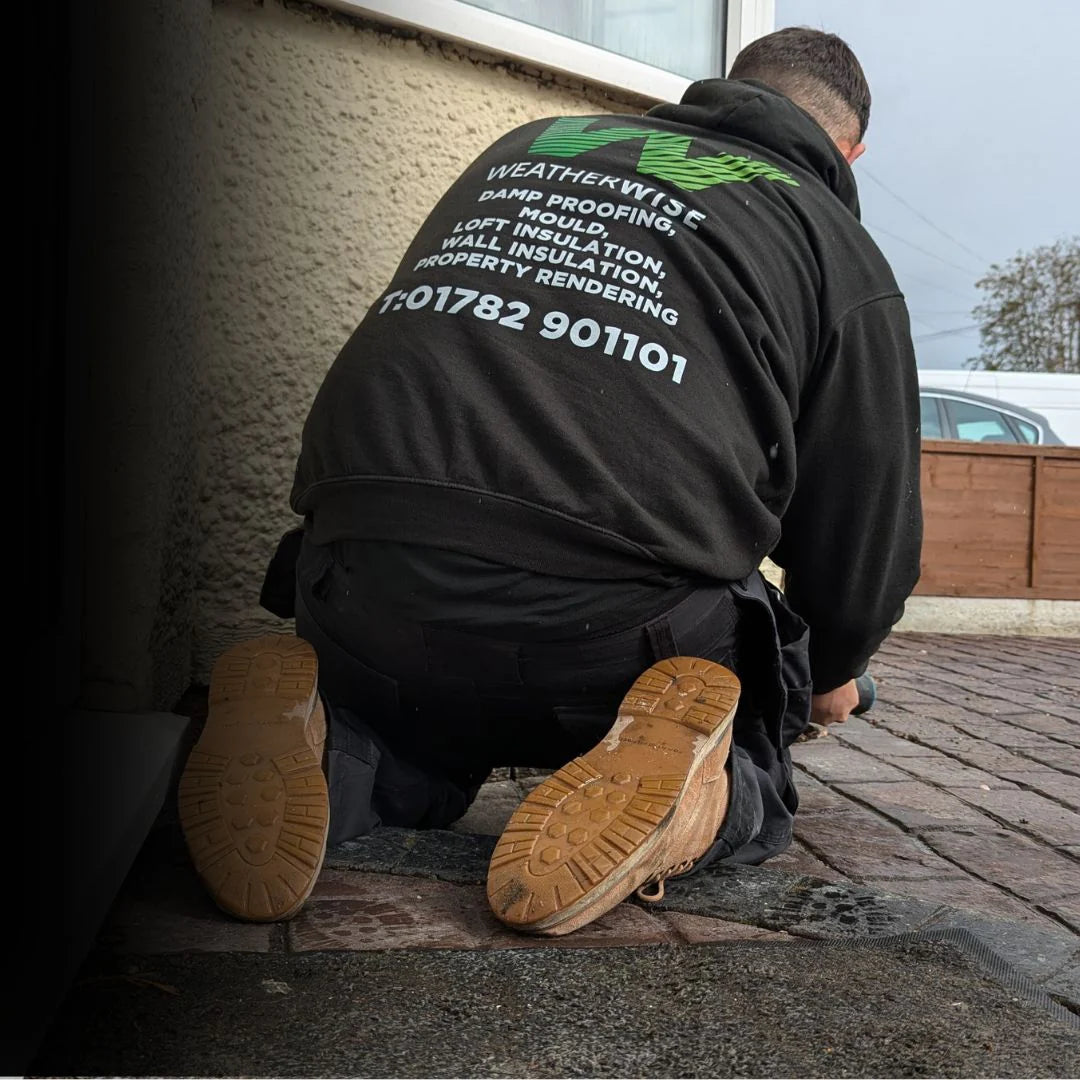
The Bottom of the Wall Often Tells the Story First
Rising damp tends to reveal itself around the lower part of the wall long before the moisture spreads further through the property. In many homes, the earliest signs appear near skirting boards, plasterwork, or ground-floor decorations, where moisture travels upward through the masonry.
Common signs of rising damp include:
- Tide marks along internal walls
- Peeling wallpaper near floor level
- Flaking or bubbling paint
- Crumbling or damaged plaster
- White salt deposits on the walls
- Damp skirting boards or timber
- Persistent musty smells in ground-floor rooms
Because similar symptoms can also appear with condensation or penetrating damp, Weather Wise carries out detailed damp surveys to confirm whether rising damp is actually present before recommending treatment.
Book a damp survey or call 01782 901101 to have the affected areas professionally assessed.

What Rising Damp Actually Means
Rising damp develops when groundwater moves upward through porous brickwork and masonry. Moisture travels through the lower sections of the wall, carrying water and salts into plaster, decorations, and surrounding materials near ground level.
This usually happens when the damp proof course has failed, becomes bridged, or was never installed properly in older properties. Unlike condensation or penetrating damp, rising damp typically affects the lower part of the wall first and gradually spreads upward through the masonry over time.
Repainting the Wall Does Not Stop Rising Damp
Fresh paint can hide damp marks for a while, but it does not stop moisture from traveling upward through the wall underneath. If the source of the moisture remains active, the staining, damaged plaster, and decorative issues usually recur.
Rising damp commonly develops when the damp proof course has failed, becomes bridged, or is missing altogether in older properties. Ground moisture then continues moving through porous masonry, carrying salts and moisture into internal walls and surrounding plasterwork.
Weather Wise surveys check whether the damp proof course is functioning correctly, how moisture is moving through the structure, and whether trapped moisture or surrounding ground levels are contributing to the problem.
Proper treatment focuses on stopping the moisture movement itself, not simply covering the visible damage on the wall surface.
Older Victorian and Edwardian properties are often more vulnerable to rising damp because many were built without modern damp-proof courses or have original systems that have deteriorated over time. Ground levels, older plaster systems, and surrounding masonry conditions can also affect how moisture travels through the structure.
The Damage Usually Spreads Further Than the Damp Patch
Rising damp does not just leave marks on the wall surface. As moisture continues moving through the masonry, surrounding materials and nearby timber can also start deteriorating, especially around ground-floor areas.
Areas commonly affected include:
- Internal walls and plasterwork
- Skirting boards and timber trims
- Wallpaper, paint, and decorations
- Flooring edges near damp walls
- Ground-floor rooms with persistent moisture
- Timber positioned against the affected masonry
- Plaster damaged by salt contamination and damp
Weather Wise surveys assess how far the moisture has travelled through the surrounding structure, helping identify whether the problem is limited to decoration damage or affecting deeper parts of the property.
Book a damp survey or call 01782 901101 to have the affected areas professionally inspected.

How Weather Wise Identifies and Treats Rising Damp Properly
A damp wall can look almost identical whether the cause is rising damp, condensation, penetrating moisture, or a hidden leak. Treating the wrong problem usually means the staining and damage return again a few months later.
That is why Weather Wise starts with a detailed damp survey before recommending any treatment. Moisture readings, wall condition checks, and damp proof course assessments help confirm whether rising damp is actually present and how far the moisture has travelled through the masonry.
What the treatment process can include:
- Detailed damp and moisture surveys
- Damp proof course inspection and assessment
- Rising damp diagnosis
- Moisture source identification
- Damp-proof treatment recommendations
- Salt-contaminated plaster assessment
- Replastering guidance where required
- Long-term moisture control recommendations
With more than 40 years of damp proofing experience, the focus stays on resolving the source of the moisture, not simply improving the appearance of the wall surface.
Where appropriate, treatment may involve installing or restoring a damp-proof course designed to reduce moisture movement through the affected masonry.

Not Every Damp Wall Is Rising Damp
Peeling wallpaper, damaged plaster, bubbling paint, and damp patches near walls can all point to a moisture problem, but rising damp is not always the cause. Condensation, penetrating damp, leaking pipework, and external water ingress can create very similar signs throughout a property.
Treating the wrong issue usually means the damp returns behind the surface, even after repairs or redecorating have been completed. Condensation problems, penetrating damp, and plumbing leaks are sometimes incorrectly treated as rising damp, which is why proper diagnosis matters before any damp proofing work begins.
Weather Wise carries out detailed damp investigations to identify how moisture is entering the property, whether the damp proof course is involved, and which type of damp problem is actually affecting the structure. Moisture readings, wall condition checks, and surrounding environmental factors are all assessed before treatment recommendations are made.
Proper diagnosis matters just as much as the treatment itself.
When Is It Time to Arrange a Damp Survey?
Some damp problems have a habit of disappearing for a few weeks, then returning in exactly the same place again. Fresh paint bubbles, wallpaper starts lifting near the floor, the wall feels cold and damp to the touch, and the smell never fully leaves the room.
Signs worth getting checked include:
- Damp patches returning after redecorating
- Bubbling or flaking paint near ground level
- Wallpaper peeling around the lower walls
- Damaged skirting boards or plaster
- Persistent musty smells indoors
- Cold, damp sections of internal walls
Weather Wise surveys help identify whether rising damp is actually present, how far the moisture has spread, and what treatment route is appropriate for the property.
Call 01782 901101 or arrange a damp survey to have the affected areas professionally assessed.
Why Homeowners Choose Weather Wise
Damp problems can look deceptively simple on the surface. A patch of staining or damaged plaster might seem like a decorating issue until the moisture keeps returning through the same section of wall again and again.
Weather Wise has more than 40 years of experience in damp proofing and structural moisture control, with surveys carried out before any treatment recommendations are made. Moisture readings, wall condition checks, and damp proof course assessments help determine whether rising damp is actually present and what is contributing to the problem.
Treatment plans are tailored to the condition of the property itself, with attention given to long-term moisture control, damaged plasterwork, and preventing recurring damp issues from continuing through the structure.
What You Get with a Free Rising Damp Survey
Recurring damp around lower walls can be frustrating when the cause is still unclear. Moisture stains, damaged plaster, and peeling decorations may continue returning unless the wall and surrounding structure are properly assessed.
During the survey, Weather Wise checks moisture levels within the walls, inspects the condition of plaster and surrounding materials, assesses the damp proof course, and investigates how moisture is moving through the masonry. The inspection also helps determine whether the issue is rising damp or another form of moisture problem producing similar symptoms.
You receive practical recommendations based on the condition of the property, including suitable treatment options, plaster guidance, and advice on controlling future moisture problems.
Call 01782 901101 or arrange a free damp survey to have the affected areas professionally assessed.
Rising Damp Questions, Answered
The questions UK homeowners actually ask. Tap to expand.
Can rising damp damage walls?
Yes. Rising damp can damage plaster, decorations, skirting boards, and surrounding materials if the moisture continues travelling through the wall over long periods.
Does rising damp spread?
The moisture can continue moving upward and affect larger wall areas if the source is not addressed, especially in older properties or buildings with ineffective damp protection.
How is rising damp treated?
Treatment usually involves identifying the moisture source, assessing the damp proof course, and applying suitable damp proofing solutions alongside repairs to affected plaster or decorations where necessary.
Is rising damp expensive to fix?
The cost depends on how far the moisture has spread, the condition of the walls and plaster, and the treatment required. Early diagnosis can often help limit more extensive repair work later.
Can rising damp be fixed permanently?
When the moisture source and damp proofing issues are treated correctly, rising damp can usually be controlled long-term alongside repairs to affected plaster and surrounding materials.
Will my walls need replastering after rising damp treatment?
In some cases, replastering may be recommended where moisture and salts have already damaged the existing plaster and decorative surfaces.