












No. Awaab's Law is English law, so it doesn't apply to homes in Wrexham or anywhere else in Wales. That doesn't let Welsh landlords off the hook for damp and mould, though. Welsh law already makes damp and mould growth part of whether a rented home is fit to live in, and social landlords in Wales now have their own deadlines. And if you also let homes over the border in England, Awaab's Law can apply to those.
What is Awaab's Law?
Awaab's Law is named after Awaab Ishak, a two-year-old who died in 2020 after long exposure to mould in his family's social rented home in Rochdale. It sets deadlines for landlords in England to deal with damp and mould once they know about it.
It has applied to social landlords in England, meaning councils and housing associations, since 27 October 2025. When they learn of a potential significant damp and mould hazard, they must:
- investigate within 10 working days
- give the tenant a written summary of what they found within 3 working days of the investigation
- make the home safe within 5 working days of the investigation
- deal with emergency hazards within 24 hours
The UK Government is now consulting on bringing Awaab's Law to private landlords in England. The consultation opened on 9 October 2026 and closes on 18 December 2026, and the government says 2027 is the earliest the rules could start. You can read the consultation on GOV.UK.
What applies to landlords in Wrexham?
In Wales the rules come from the Renting Homes (Wales) Act 2016. Since 1 December 2022, a landlord has had to make sure a rented home is fit for human habitation at the start of the occupation contract and for as long as it lasts. That covers occupation contracts made for a term of less than seven years.
The Welsh Government's guidance lists 29 matters that decide whether a home is fit to live in, and damp and mould growth is the first one on the list. If a landlord and tenant disagree about whether a home is fit, it's for a court to decide.
Landlords in Wales also have to keep the home in repair, and there are separate rules on smoke alarms, carbon monoxide alarms and electrical safety checks. The Welsh Government's guidance for landlords sets them all out.
Councils and housing associations in Wales
Social landlords in Wales also have to meet the Welsh Housing Quality Standard. Since April 2026 it has set timescales for dealing with serious hazards, including damp and mould, that come from disrepair:
- where there's a risk of imminent harm, investigate within 24 hours and put it right within a further 24 hours
- otherwise, investigate within 10 working days and put it right within a further 5 working days
- if the work can't be done in time, give the tenant a written plan within 5 working days
Social landlords also have to publish their response times. The Welsh Government announced the change in December 2025, with Awaab Ishak's death in mind.
Private landlords in Wales
Those timescales are for social landlords. For a private landlord in Wrexham, the fitness rules above are what apply. In the same December 2025 statement, the Welsh Government reminded private landlords that damp and mould have to be dealt with promptly under those rules, and said it was also looking at how to protect private tenants from hazards. It's worth keeping an eye on gov.wales for anything new.
Letting homes over the border in England?
If you also let homes in England, for example in Chester or elsewhere in Cheshire, those homes follow English law. A social landlord already has to meet Awaab's Law there. A private landlord has no fixed Awaab's Law deadline yet, but councils in England can already act on serious damp and mould, and since June 2026 they can fine a private landlord up to £7,000 for failing to take reasonable steps to keep a home free of the most serious (category 1) hazards.
What landlords in Wrexham can do now
The rules differ on each side of the border, but the job is the same. Find out what's causing the damp or mould, and put it right so it doesn't come back.
- Act on reports quickly. When a tenant tells you about damp or mould, get someone to look at it. Mould that's wiped off without fixing the cause usually grows back.
- Find the cause. Condensation, rain getting in, rising damp, something bridging the damp proof course and a slow plumbing leak can all look alike on a wall. Each one needs a different fix.
- Check the ventilation. An extractor fan that doesn't work, trickle vents that are shut or painted over and gaps in the loft insulation all make condensation more likely.
- Keep a record. Note when a problem was reported, who looked at it, what they found and what was done about it.
How we can help
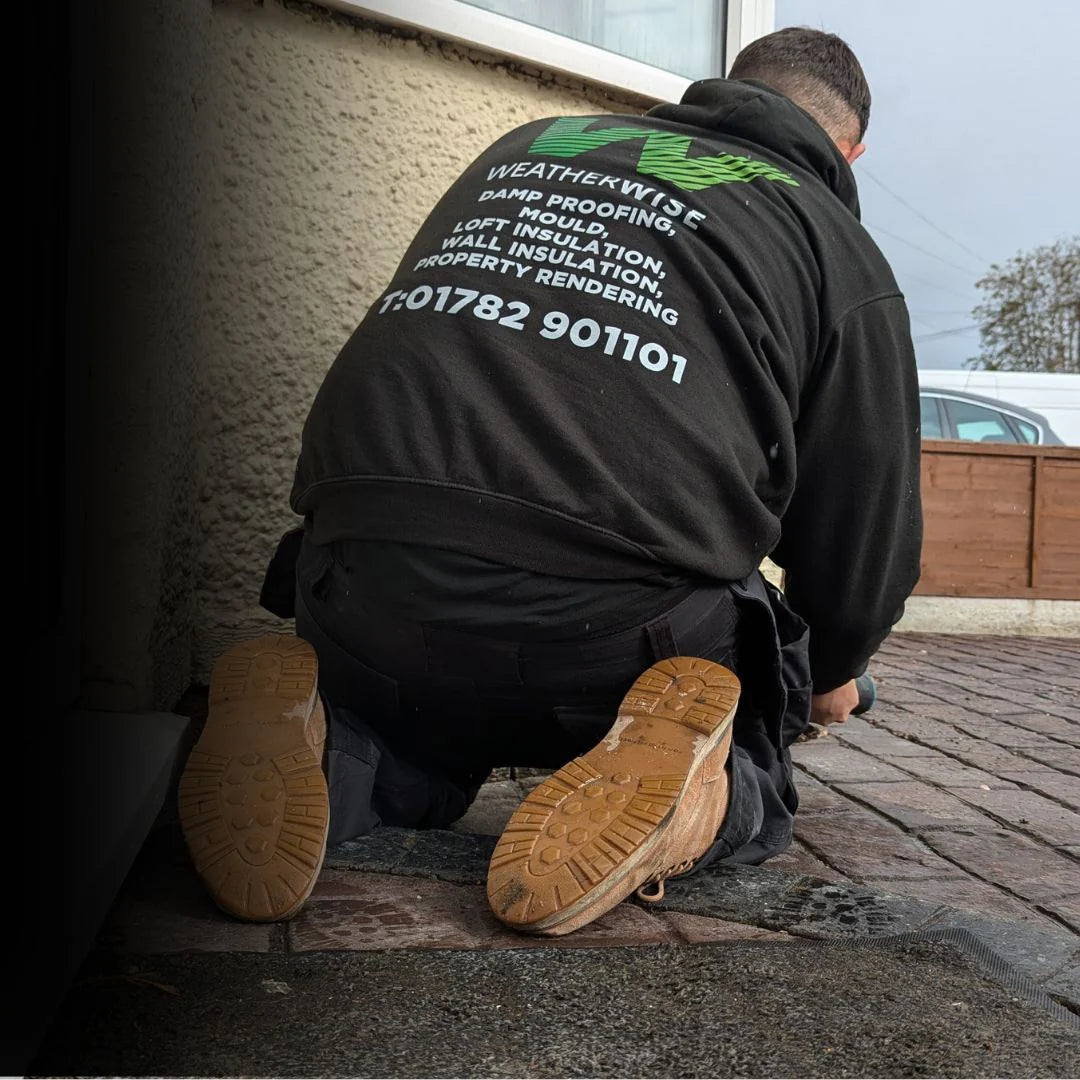
Weather Wise Solutions Limited is a damp, mould and condensation specialist based in Newcastle-under-Lyme, and North Wales is one of the six areas we cover. Our damp surveys are free, for landlords as well as homeowners. One of our surveyors visits, finds out what's causing the problem and, if work is needed, gives you a quote.
If you need the findings in writing, for your own records or for your tenant, we offer two paid reports:
- Full Damp & Timber Report, £449. An inspection of the accessible areas inside and out, a moisture and timber assessment, photos and a written report with clear recommendations.
- Ventilation Inspection & Report, £349. For condensation and mould that keep coming back, with a written report and practical recommendations.
Every damp proof course we install comes with a 20-year insurance backed guarantee. Our tanking is covered by a Remmers manufacturer guarantee, because we're a fully approved Remmers installer. There's more on our page on damp and mould surveys for landlords.
To book a free survey, call us on 01782 901101 or book online.
This post is a short summary of the law, not legal advice.
Updated 20 October 2026. An earlier version of this post said Awaab's Law applies in Wales. It applies in England only, so we've rewritten it.