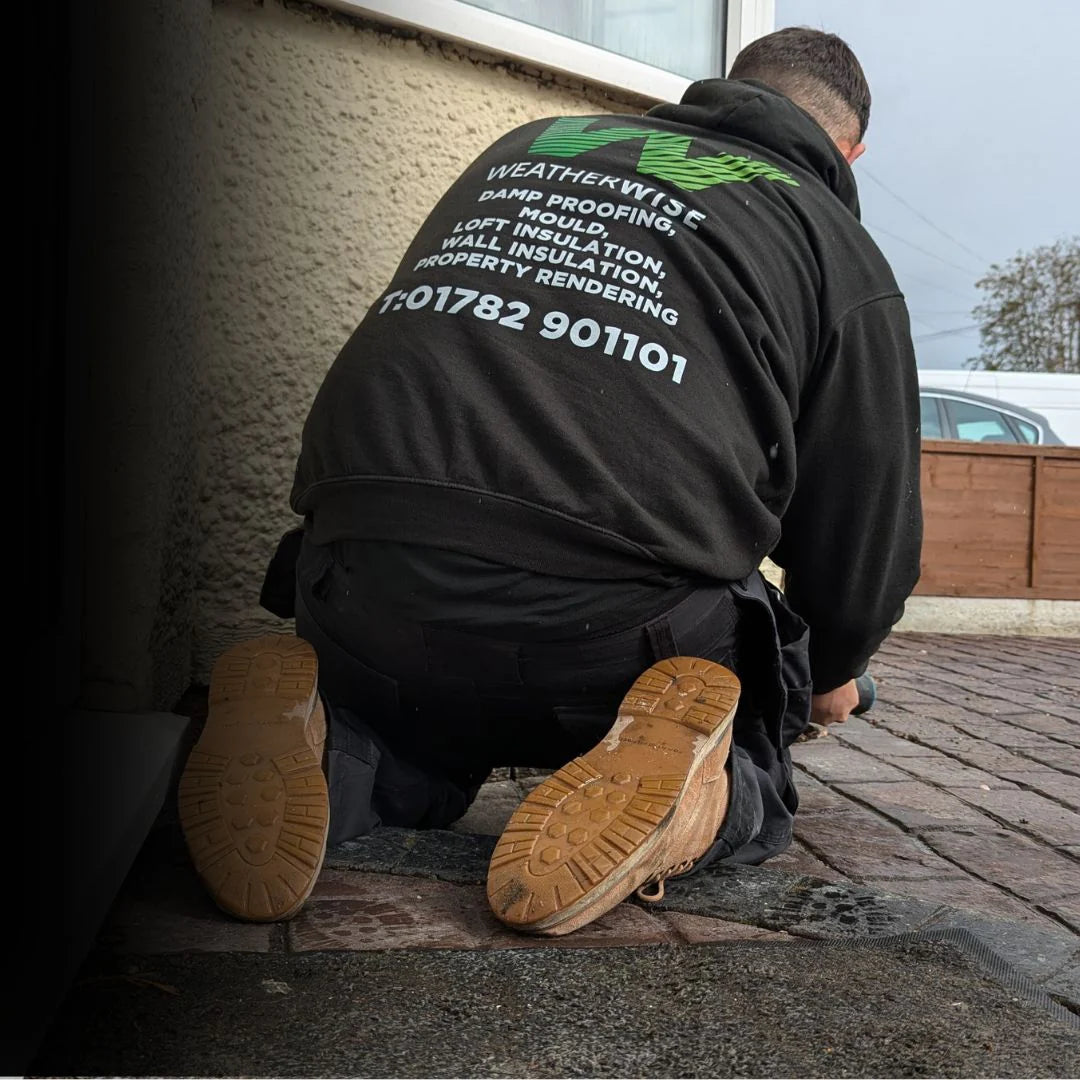










A damp patch can look straightforward, but the wrong diagnosis can turn a simple maintenance issue into thousands of pounds of unnecessary work. Rising damp is often blamed first, chemical DPCs are prescribed by default, and moisture-meter readings are treated as proof, even when the real cause may be leaking gutters, blocked drains, high ground levels, condensation or penetrating damp.
Listen & watch
▶ Watch on YouTube | 🎧 Listen on Spotify | Subscribe on YouTube
Highlights
In Episode 4, Aaron is joined by Andrew Martin of The Damp Men to discuss why the damp-proofing industry has developed such a mixed reputation. Andrew shares his journey from bricklaying and general construction into property preservation, the sales-focused practices that made him question the industry, and why he believes honest diagnosis must always come before treatment.
We cover:
- Andrew’s journey from bricklaying contractor to founding The Damp Men
- Why the damp-proofing industry remains widely misunderstood and why greater regulation could help
- The difference between diagnosing a problem and simply selling a treatment
- Why chemical DPC injections are so often recommended when they may not be needed
- What moisture meters actually measure and why readings must be interpreted correctly
- The importance of inspecting gutters, drainage, external ground levels and the entire building before specifying work
- Penetrating damp, bridging, condensation, salts and some of the most common causes of misdiagnosis
- Independent surveys, remedial contractors and the need for better collaboration across the industry
- Why choosing the cheapest quote can lead to failed work, repeat costs and further damage
- Basement waterproofing, appropriate materials and the difference the correct system can make
- Building a family business, maintaining high standards and knowing when to walk away from the wrong job
- Career longevity, work-life balance and Andrew’s determination to continue helping homeowners
We finish with The Healthy House Checklist, including three practical steps homeowners can take to protect their properties: maintain the exterior, improve ventilation and airflow, and carry out proper research before choosing someone to diagnose or repair a damp problem.