














Soft or spongy floorboards near the skirting boards are a common warning sign of an underlying subfloor problem. In many Heywood homes — particularly those with suspended timber floors — this issue is often linked to excess moisture, poor ventilation, or wet rot developing in joists close to external walls.
Replacing the floor covering alone won’t solve the issue. If moisture remains beneath the floor, the problem will continue and may worsen over time.
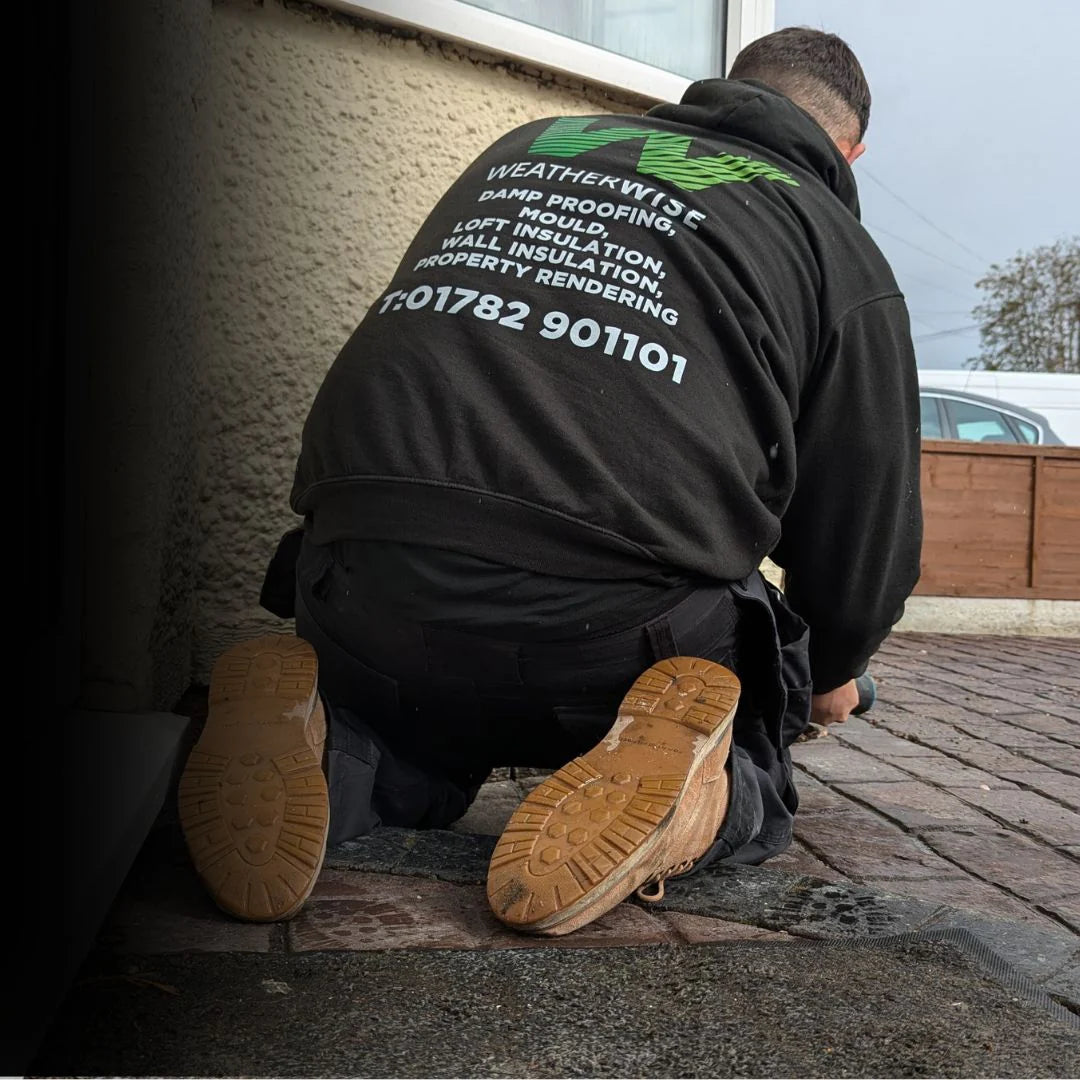
At Weather Wise Solutions — a family-run timber and damp specialist — we regularly investigate floors that feel sound in the centre of the room but weak or springy near the walls.
🪵 Why Do Floorboards Go Soft Near Skirtings?
1️⃣ Subfloor Moisture at External Walls
Moisture tends to be highest near external walls, where cold masonry, air leakage and ground moisture meet. This creates ideal conditions for timber decay at joist ends and floor edges.
2️⃣ Wet Rot in Joist Ends
Wet rot commonly develops where timber is in prolonged contact with damp masonry or high humidity. Joist ends built into external walls are especially vulnerable.
3️⃣ Poor or Blocked Subfloor Ventilation
Blocked air bricks, bridged cavities or landscaping changes can restrict airflow beneath the floor, allowing moisture to build up and remain trapped.
4️⃣ External Defects Increasing Moisture Levels
Defective pointing, leaking gutters or raised external ground levels can introduce moisture into the wall, which then migrates into adjacent floor timbers.
5️⃣ Historic Alterations
Extensions, internal wall removals or changes to ventilation routes can significantly alter how moisture behaves beneath a suspended floor.
🔍 How We Diagnose Soft Floorboards in Heywood
Our timber inspections are carried out in line with PCA methodology and include:
-
Selective lifting of floorboards (where possible)
-
Visual inspection of joists, wall plates and sleeper walls
-
Moisture testing of structural timbers
-
Assessment for wet rot or fungal decay
-
Subfloor ventilation performance checks
-
Identification of external moisture sources
This allows us to confirm whether the softness is structural, moisture-related or both.
🛠️ How the Problem Is Fixed Properly
Depending on findings, remedial works may include:
-
Improving subfloor ventilation
-
Addressing external moisture defects
-
Treating or removing decayed timbers where required
-
Isolating joist ends from damp masonry
-
Reinstating floors only once moisture levels are controlled
Where materials are required, we use trusted suppliers such as:
🔗 PAM Ties – https://www.pamties.co.uk/
🔗 Wykamol Group – https://wykamol.com/
All work follows guidance set by:
🔗 Federation of Damp – https://federationofdamp.co.uk/
🔗 Damp Proofing Association – https://www.dampproofingassociation.co.uk/
For independent reassurance, you can also view our profiles on:
🔗 TrustATrader – https://www.trustatrader.com/traders/weather-wise-solutions-limited-damp-surveyor-newcastle-under-lyme
🔗 Checkatrade – https://www.checkatrade.com/trades/weatherwisesolutionslimited
**Soft floorboards are rarely a surface issue — they’re usually a moisture problem beneath the floor.
Fixing the cause protects the structure.**
📍 Book a free survey:
https://weatherwiseuk.co.uk/pages/contact